AEO vs GEO: What They Are, How They Differ, and What Happens After the Click
Published: July 7th, 2026
For most of the last decade, your first impression was your homepage. Someone searched, clicked a blue link, and arrived on a page you controlled. That order is changing. Increasingly, a buyer’s first impression of you is a sentence an AI wrote, in an answer you never saw, citing sources you didn’t choose.
That shift has created two new disciplines with confusingly similar names. Here is what each one actually means, how they relate, and the part almost nobody is optimizing for.
Answer Engine Optimization (AEO)
AEO is the practice of getting your content retrieved and cited when an AI answers a direct question. Think of the specific, factual queries people type into ChatGPT or Perplexity: “what’s the difference between X and Y,” “which tools do Z,” “how much does A cost.” AEO is about being the source the engine pulls from when it composes that answer.
In practice, AEO rewards content that is easy to extract: clear questions and clear answers, structured formatting, facts stated plainly, and claims an engine can lift without ambiguity. It is close cousin to the old featured-snippet game, moved into the generative era.
Generative Engine Optimization (GEO)
GEO is the broader discipline: influencing how generative engines represent and synthesize you across the full range of answers, not just direct-question retrieval. The term comes from a 2024 Princeton-led study that ran controlled tests on what actually moves a source’s visibility inside AI-generated responses. Their finding, in short: adding cited sources, direct quotations, and concrete statistics measurably increased how often a page was surfaced, with several of those tactics improving visibility by roughly 30 to 40 percent.
GEO covers the things that make an engine trust and reach for you: third-party citations, quotable language, data points, consistent descriptions of who you are across the web, and the reputational signals the model has absorbed.

So what’s the actual difference?
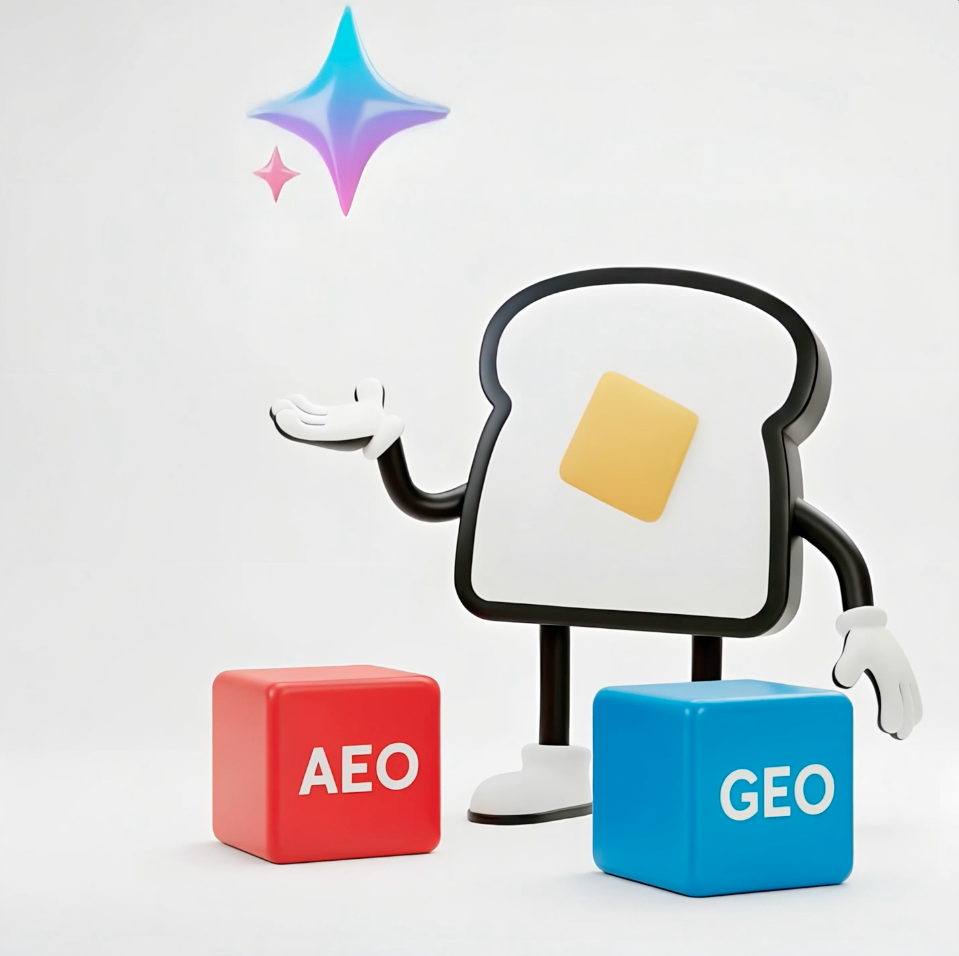
The cleanest way to hold it: AEO is a part of GEO. AEO is the answer-retrieval layer, being the thing that gets selected for a specific question. GEO is the whole game of being represented well by generative engines, everywhere they talk about you.
If AEO is “did we get cited for this question,” GEO is “when an AI describes our category, are we in the story, and is the story right.”

Why this matters for B2B specifically
B2B buying now starts in the answer box. Buyers ask an engine to compare options, summarize a category, or vet a vendor before a single form is filled. Ranking on Google no longer guarantees you are in that summary. And being in the summary no longer guarantees the buyer becomes a lead you can see.
That last gap is the one that gets ignored. AEO and GEO are visibility disciplines. They win the introduction. They do not, on their own, tell you anything about the person who acted on it.
The part nobody optimizes: what happens after the click
Picture the buyer who read an AI summary that mentioned you, clicked through, and is now on your pricing page. They arrive already educated, already comparing, and almost always anonymous. Your analytics record a session. Your CRM records nothing, because no form was filled. The most qualified visitor of the week can pass through and leave no name behind.
This is the blind spot between “they arrived” and “they converted.” You spent effort earning the AI’s citation. The visit it produced is the thing you actually wanted, and it is the thing most stacks still can’t see into.

Where Bread & Butter fits
The information needed to recognize that visitor was already in the visit. The pages they returned to, the sequence they moved through, whether their behavior matches the people who became customers. Bread & Butter lets you see it. Verified identity turns an anonymous session into a real person with a role and a company. LeadScore AI puts a 1 to 10 score on how close they are to buying. The Focused Tab clears out the bots and bounces so what remains is the handful of real prospects that visibility earned you.
AEO and GEO get the buyer to the door. What you learn about them once they walk through is still yours to win.